How to Simultaneously Bake Bread, Viennoiserie and Pizza in a Multi-Deck Oven (Performance)
How to run a multi-deck oven across a mixed menu: top and bottom heat, one profile per chamber, glass doors, base rack ergonomics, and when extra decks stop paying for themselves.
2026/11/17
Reading volume: 0
News Details
Why decks suit a mixed menu
A deck oven is not one oven with four shelves. It is four independent baking chambers stacked in one frame, each with its own heating elements and its own controls. That single fact explains why the format survives next to rack ovens and convection ovens: it lets a bakery run several products with different requirements at the same time, instead of committing the whole chamber to one profile.
The practical consequence is that a four-deck oven can carry a morning of sourdough, a midday run of pastries and an afternoon of flatbreads without any of them waiting for the others.
Top heat and bottom heat are two different tools
Most deck ovens give separate settings for the top and bottom elements of each chamber, and the ratio matters more than any single temperature figure.
- Bottom-led baking drives oven spring and sets the base. It is what gives a hearth-style loaf its lift and a pizza its crisp underside.
- Top-led baking browns and finishes. It is what gives a pie or a tart its colour without drying the base.
- Balanced heat is the default for pan bread, buns and most enriched doughs, where an even bake matters more than a pronounced crust.
Because the settings are per deck, a bakery can run a bottom-heavy profile on the lower chamber for bread and a top-heavy profile two chambers above for pastry. Both are visible through the glass without opening a door.
Planning a day across four decks
The useful exercise before buying a multi-deck oven is to write the day out deck by deck, not product by product.
| Deck | Typical duty | Profile |
|---|---|---|
| Top | Pastry, tarts, finishing work | Top-led, shorter bake, close watching |
| Upper middle | Baguettes, small loaves | Balanced with a steam opening |
| Lower middle | Pan bread, buns, sandwich loaves | Balanced, longer bake, forgiving |
| Bottom | Hearth bread, pizza, flatbread | Bottom-heavy, highest deck temperature |
Two rules keep the plan workable. Put the products that need the closest attention nearest eye level, and keep the hottest, most forgiving bake at the bottom, where heat is strongest and where a tray is easiest to slide in and out.
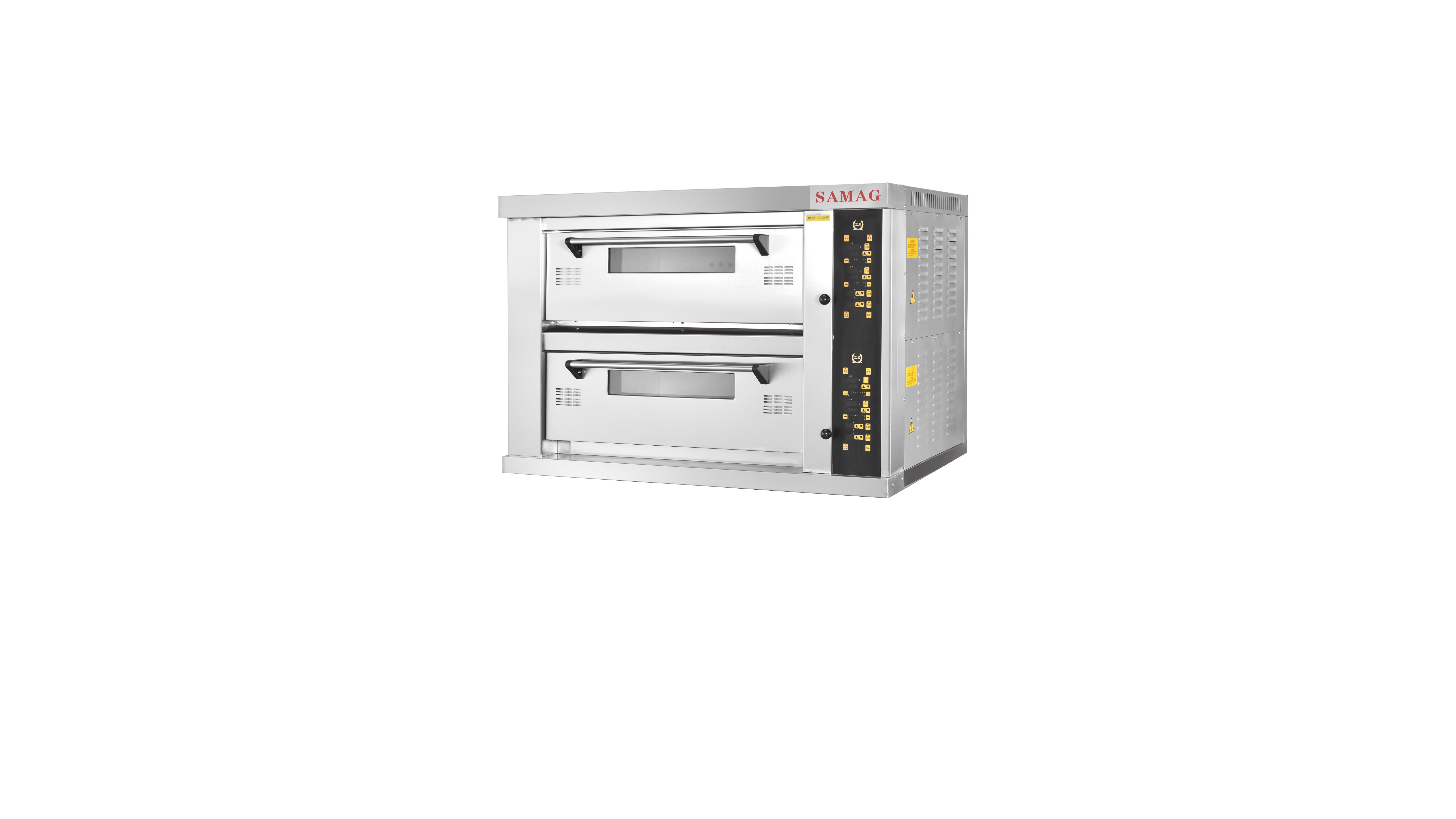
Our deck ovens are built from one deck up to four, each chamber with its own micro-computer panel and independent top and bottom settings, so the layout of the plan is a purchasing decision rather than an afterthought. A triple deck oven covers most mixed shops; where a fourth profile is genuinely needed, the four-deck version costs less than two separate ovens and takes less floor.
Doors, glass and the cost of looking
Every time a deck door opens, the chamber loses heat and the bake loses time. That is why glass doors and interior lighting are not a cosmetic upgrade on a multi-deck oven: they let the baker judge colour through the window instead of pulling a tray out to look at it.
Two habits decide how much that matters. Load and unload a deck in one movement rather than several, and avoid opening a chamber to "check" during the stage when the product is still rising. On a busy morning, the difference between a bakery that opens doors twenty times and one that opens them eight times is visible in the gas bill and in the consistency of the second batch.
The same logic applies to the door seal. A worn gasket shows up first as uneven browning near the hinge side, then as longer bake times. It is one of the cheapest parts on the machine and one of the most frequently ignored.
The base rack: storage, ergonomics, flow
A deck oven is a stack of chambers that has to be loaded by hand, so the height of the bottom deck matters. Two arrangements solve this in different ways.
A deck oven with base tray rack lifts the baking chamber to working height and uses the space underneath for tray slides, so empty pans and finished trays live directly below the oven. In a small shop this removes a whole set of movements from every bake.
The alternative is a low oven loaded from a trolley, which suits larger trays and heavier products but puts more load on the operator's back. If the same people load the oven all day, the ergonomic version usually pays for itself in less obvious ways than throughput.
When more decks is the wrong answer
Decks buy flexibility, not labour savings. Every tray is still loaded and unloaded by hand, and four decks means four times the door openings, four temperature profiles to watch and more surface to clean. Above a certain volume, a rack oven with trolley loading is the better tool, because the labour per tray falls sharply even though the oven has only one chamber.
A useful test: count the different baking profiles you genuinely run in a week. If the answer is two, a two-deck oven plus a convection oven is often the cheaper and simpler arrangement. If it is four or five, the extra decks are earning their keep.
What to specify
Send a supplier the deck count you need, the tray size and how many trays per deck, maximum temperature, whether steam is required per deck, the products and their bake times, available power or gas, ceiling height and the floor area, plus whether the oven will be visible to customers. That last item is not vanity: in an open kitchen, glass area, finish and extraction all change with the answer.
We manufacture deck, convection and rack ovens in Wuxi and also plan bakery layouts, so a deck-by-deck production sheet is enough to check whether the oven you are considering actually fits the day you run.
Share to:


)


