Best Commercial Oven for Baking: Top Convection Ovens for Your Business
Compare the best commercial convection ovens for baking. Discover reliable features, smart selection tips, and trusted suppliers for your busy kitchen.
2026/11/02
Reading volume: 3
News Details
Best Commercial Oven: How to Choose the Right Convection Oven for Baking
Choosing the best commercial oven is an important decision for bakeries, restaurants, and food production businesses. The right equipment affects baking consistency, production capacity, energy consumption, and daily operating costs. Rather than focusing only on the purchase price, buyers should consider how well an oven matches their menu, kitchen layout, and production requirements. Commercial ovens are available in different sizes, heating systems, and configurations. Understanding their features and performance can help businesses select equipment that supports efficient operations and consistent baking results.
What Defines the Best Commercial Oven?
A good commercial oven should provide stable temperature control and even heat distribution throughout the cooking chamber. These features are particularly important for bakeries producing bread, cakes, pastries, and other baked goods in multiple batches. Consistent heating helps reduce uneven browning and variations in product quality. Construction quality also affects long-term performance. Stainless steel interiors and durable components are commonly used in commercial ovens because they are suitable for demanding kitchen environments and routine cleaning. Effective insulation helps retain heat, while accessible components make maintenance more convenient. Capacity is another important consideration. An oven that is too small may limit production during busy periods, while an oversized model can occupy unnecessary space and consume more energy. Buyers should evaluate tray capacity, baking volume, available floor space, and expected daily output before making a decision.
Why Choose a Convection Oven for Baking?
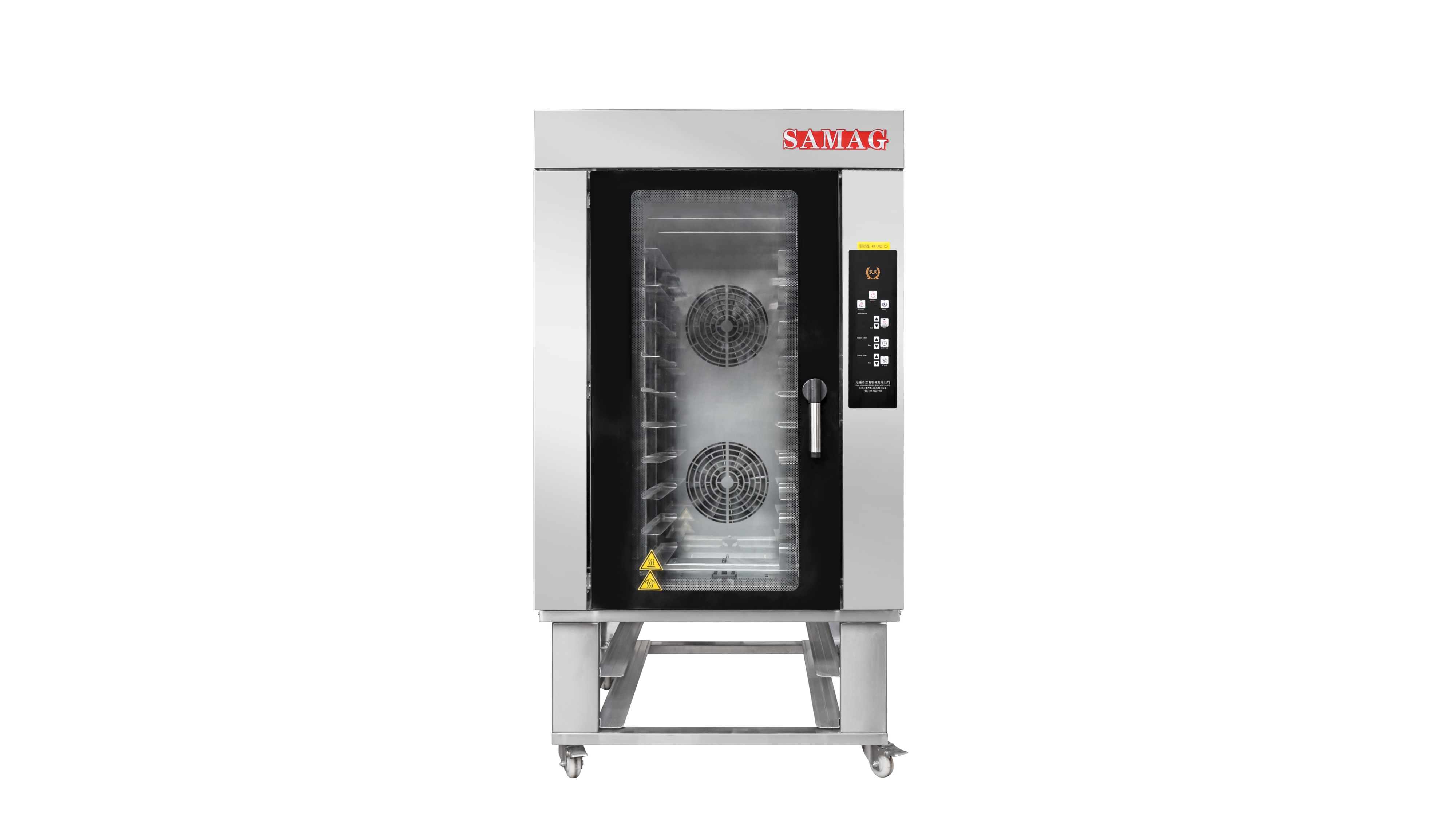
A commercial convection oven uses fans to circulate heated air throughout the cooking chamber. This helps distribute heat more evenly than conventional heating alone, making convection models suitable for baking multiple trays of cookies, pastries, and other products. More consistent airflow can also reduce the need for frequent tray rotation, depending on the oven design and load. Another advantage is efficient heat transfer. Many convection ovens can shorten baking times and improve production efficiency, particularly in operations handling large batches. However, recipes may require adjustments to temperature or baking time because circulating hot air can affect how quickly food cooks. Convection ovens are also versatile enough for different commercial kitchen applications. They can be used for pastries, bread products, roasted vegetables, and various prepared foods. When selecting a model, buyers should check fan speed settings, temperature range, tray spacing, and whether the oven supports the specific baking requirements of their products. Energy efficiency should also be considered when comparing equipment. Insulation quality, heating element performance, preheating time, and door sealing all influence energy consumption. Choosing an appropriately sized oven helps balance production needs with operating costs.
How to Select the Best Commercial Oven?
Before purchasing, measure the available installation space and evaluate the kitchen layout. Consider ventilation, electrical connections, gas supply, and other installation requirements. These factors can affect both equipment compatibility and the total project cost. The choice between gas and electric commercial ovens depends on local energy prices, kitchen infrastructure, and operating preferences. Electric models often offer precise temperature control, while gas models may provide different operating cost advantages depending on local utility rates. Buyers should compare actual specifications and energy consumption rather than assuming one type is always more economical. It is also important to review technical details such as temperature range, heating recovery time, tray capacity, control systems, and safety features. Requesting product specifications and testing the oven with representative recipes can provide a better understanding of its actual performance. The purchase budget should include more than the equipment itself. Delivery, installation, staff training, spare parts, and routine maintenance can all contribute to the overall investment. Discussing these costs with suppliers in advance helps businesses avoid unexpected expenses.
Where to Find a Reliable Commercial Oven Supplier?
Choosing an experienced commercial oven supplier is just as important as selecting the equipment. A dependable manufacturer or dealer should provide detailed product information, clear warranty terms, and access to replacement parts. Technical support is particularly valuable when equipment is used continuously in commercial kitchens. Buyers should also evaluate the supplier's manufacturing experience, quality inspection procedures, and ability to provide after-sales service. Customer reviews, product demonstrations, and references from similar businesses can help assess equipment reliability beyond promotional specifications. For larger purchases, ask about installation guidance, operator training, delivery arrangements, and maintenance support. Businesses sourcing equipment internationally should also confirm electrical or gas specifications, applicable certifications, and export documentation before placing an order. The best commercial oven is ultimately the one that matches your production needs, kitchen conditions, and long-term operating budget. Comparing technical performance, construction quality, and supplier support will help you make a more informed investment and maintain consistent baking operations.
Share to:


